
Uncategorized
A Complete Guide to Curtain Fabrics: Velvet, Linen, Cotton, and More

Nov
Choosing the right curtain fabric is just as important as choosing the right color or design. The fabric determines how your curtains look, how much natural light enters your room, the level of privacy they provide, and how they affect the overall atmosphere of your interior.
From luxurious velvet curtains to breathable linen and versatile cotton, every fabric has its own unique qualities. Some are ideal for creating a cozy bedroom, while others are perfect for bright living rooms, elegant dining spaces, or modern offices.
In this complete guide, we’ll explore the most popular curtain fabrics, their benefits, drawbacks, and how to choose the best fabric for your home.
Why Curtain Fabric Matters
Curtains are more than decorative window coverings. The right fabric can transform a room by adding warmth, texture, elegance, and functionality.
When selecting curtain fabrics, consider the following factors:
- Light control: How much sunlight should enter your room?
- Privacy: Do you need complete privacy or a light, airy feel?
- Insulation: Should the curtains help reduce heat, cold, or drafts?
- Style: Do you prefer modern, traditional, minimalist, or luxurious interiors?
- Maintenance: How easy is the fabric to clean and maintain?
- Durability: Will the curtains be exposed to direct sunlight or daily use?
Understanding these factors will help you find a curtain fabric that suits both your lifestyle and interior design.
1. Velvet Curtains – Luxury, Elegance, and Comfort
Velvet is one of the most luxurious curtain fabrics, known for its rich texture, soft feel, and elegant appearance. Its thick pile creates a beautiful depth of color, making velvet curtains a popular choice for sophisticated interiors.
Benefits of velvet curtains
- Excellent privacy due to their dense fabric.
- Help reduce incoming light, especially when lined.
- Provide a fuller, heavier, luxurious appearance.
- Can help reduce drafts and improve thermal comfort.
- Add a sophisticated look to bedrooms and living rooms.
Best for
- Luxury living rooms
- Master bedrooms
- Formal dining rooms
- Hotel interiors
- Classic and contemporary luxury homes
Things to consider
Velvet curtains are relatively heavy and may require strong curtain rods and suitable hardware. They can also collect dust and may require special cleaning depending on the fabric composition.
Style tip: Choose emerald green, navy blue, burgundy, charcoal, or warm beige velvet for a luxurious and timeless look.
2. Linen Curtains – Natural, Airy, and Timeless
Linen curtains are loved for their natural texture, relaxed elegance, and light, breathable appearance. Made from flax fibers or linen blends, they bring a subtle organic beauty to any room.
Linen is especially popular in Scandinavian, coastal, minimalist, and contemporary interior designs.
Benefits of linen curtains
- Natural-looking texture and understated elegance.
- Allow filtered daylight to enter when loosely woven.
- Create a bright, airy atmosphere.
- Work beautifully with neutral color palettes.
- Pair well with wood, stone, and natural decor.
Best for
- Living rooms
- Dining areas
- Bedrooms
- Coastal interiors
- Scandinavian and minimalist homes
Things to consider
Lightweight linen curtains may offer limited privacy at night when indoor lights are on. Linen also tends to wrinkle, which is often considered part of its natural charm.
Style tip: Use natural linen curtains in white, ivory, oatmeal, sand, or soft grey for a calm and sophisticated interior.
3. Cotton Curtains – Versatile, Practical, and Easy to Style
Cotton is one of the most popular curtain fabrics because of its versatility, affordability, and wide range of colors and patterns.
It can be used in almost any room and is available in lightweight, medium-weight, and heavier woven varieties.
Benefits of cotton curtains
- Available in countless colors, patterns, and styles.
- Suitable for modern and traditional interiors.
- Easy to coordinate with furniture and decor.
- Generally easier to maintain than delicate specialty fabrics.
- Available in a wide range of price points.
Best for
- Bedrooms
- Living rooms
- Children’s rooms
- Everyday residential interiors
- Casual and contemporary homes
Things to consider
Lightweight cotton may not provide enough privacy or light blocking on its own. Cotton can also shrink if washed incorrectly, so always follow the fabric’s care instructions.
Style tip: Printed cotton curtains can add personality to a room, while plain cotton curtains offer a clean and timeless look.
4. Sheer Curtains – Soft Light and Elegant Privacy
Sheer curtains are made from lightweight, translucent fabrics that allow natural light to flow into a room while softening harsh sunlight.
They are often used alone for a light decorative effect or layered with blackout or heavier curtains for additional privacy and light control.
Benefits of sheer curtains
- Filter sunlight beautifully.
- Create a soft and airy atmosphere.
- Make rooms feel brighter and more spacious.
- Add elegance without visually overwhelming the interior.
- Ideal for layered curtain designs.
Best for
- Living rooms
- Large windows
- Apartments
- Sunrooms
- Modern and minimalist interiors
Things to consider
Sheer curtains offer limited privacy at night, particularly when the room is illuminated and it is dark outside.
Style tip: Combine white or ivory sheer curtains with heavier neutral drapes for a beautiful layered window treatment.
5. Polyester Curtains – Affordable, Durable, and Low Maintenance
Polyester is a widely used synthetic curtain fabric because it is practical, durable, and often budget-friendly. It is available in a wide variety of textures, finishes, and designs.
Polyester can imitate the appearance of linen, cotton, silk, and other materials, making it a versatile option for modern homes.
Benefits of polyester curtains
- Generally affordable.
- Often resistant to wrinkling and shrinking.
- Available in many colors and textures.
- Easy to maintain compared with many delicate fabrics.
- Suitable for everyday use.
Best for
- Rental apartments
- Family homes
- Bedrooms
- Living rooms
- Budget-conscious decorating
Things to consider
Polyester is a synthetic fiber and may not offer the same natural texture as linen or cotton. Some polyester fabrics may also be sensitive to high heat.
Style tip: Textured polyester curtains can deliver the look of premium fabrics without the higher cost.
6. Silk Curtains – Sophisticated and Refined
Silk curtains are known for their smooth texture, subtle sheen, and elegant draping. They bring a refined and sophisticated touch to interiors, particularly in formal or luxury settings.
Natural silk has a beautiful appearance, while silk-look fabrics and blends can offer a similar aesthetic with different care requirements.
Benefits of silk curtains
- Elegant sheen and luxurious appearance.
- Beautiful draping and soft folds.
- Enhance formal interior designs.
- Available in rich and sophisticated colors.
Best for
- Luxury bedrooms
- Formal living rooms
- Dining rooms
- Boutique hotels
- Classic interiors
Things to consider
Natural silk can be sensitive to sunlight, moisture, and staining. Lining silk curtains is often recommended to protect the fabric and improve privacy. Cleaning may require professional care.
Style tip: Champagne, ivory, bronze, taupe, and soft gold silk curtains pair beautifully with elegant furniture and classic decor.
7. Blackout Curtain Fabrics – Better Darkness and Privacy
Blackout curtains are designed to significantly reduce the amount of light entering a room. They are particularly useful for people who prefer a darker sleeping environment or need to limit glare.
Blackout performance can come from specially constructed fabric, coatings, multiple layers, or an integrated lining.
Benefits of blackout curtains
- Reduce unwanted light.
- Improve bedroom privacy.
- Help reduce glare on televisions and screens.
- Can help with thermal comfort when properly constructed and fitted.
- Available in many colors and decorative styles.
Best for
- Bedrooms
- Nurseries
- Media rooms
- Shift workers’ bedrooms
- Rooms with bright streetlights
Things to consider
Blackout curtains are not necessarily made from one specific fiber. Polyester is commonly used, but blackout curtains can feature different materials and constructions.
Style tip: Choose blackout curtains with a decorative outer fabric and a blackout lining to combine beautiful design with practical performance.
8. Chenille Curtains – Soft Texture and Cozy Appeal
Chenille curtains feature a soft, plush, textured surface that creates a warm and inviting appearance. The fabric is known for its distinctive fuzzy texture and rich visual depth.
Benefits of chenille curtains
- Soft and textured appearance.
- Create a cozy, comfortable atmosphere.
- Often provide good coverage and privacy.
- Add depth to simple interior designs.
- Available in elegant solid colors and textured patterns.
Best for
- Living rooms
- Bedrooms
- Traditional homes
- Cozy interiors
- Luxury decorative window treatments
Style tip: Use chenille curtains in warm shades such as mocha, taupe, cream, or dusty blue to create a welcoming atmosphere.
9. Jacquard Curtains – Decorative Patterns and Sophisticated Style
Jacquard curtains feature patterns woven directly into the fabric rather than simply printed on the surface. This weaving technique allows for intricate designs, including florals, geometric shapes, damask patterns, and textured motifs.
Benefits of jacquard curtains
- Rich woven patterns and decorative details.
- Elegant and sophisticated appearance.
- Available in traditional and modern designs.
- Add visual interest without needing additional decoration.
Best for
- Formal living rooms
- Dining rooms
- Classic interiors
- Hotel rooms
- Statement window designs
Style tip: When using patterned jacquard curtains, keep surrounding furniture and accessories relatively simple to let the fabric stand out.
10. Acrylic and Blended Curtain Fabrics – Practical Performance
Some curtains use acrylic fibers or blends combining synthetic and natural materials. These blends can be designed to balance softness, durability, appearance, and cost.
Fabric performance depends on the specific fiber combination and weave rather than the fiber name alone.
Benefits
- Available in different textures and weights.
- Can provide improved durability depending on construction.
- May offer more affordable alternatives to specialty fabrics.
- Suitable for decorative and functional applications.
Best for
- Everyday living spaces
- Decorative window treatments
- Contemporary interiors
- Homes looking for practical fabric options
Curtain Fabric Comparison Table
Choosing the right curtain fabric can be easier when comparing the main features of each material.
| Fabric | Appearance | Light Control | Maintenance | Best Room |
|---|---|---|---|---|
| Velvet | Rich & luxurious | High* | Moderate | Bedroom, living room |
| Linen | Natural & airy | Low–Medium | Moderate | Living room |
| Cotton | Versatile & classic | Varies | Easy–Moderate | Any room |
| Sheer | Light & delicate | Low | Easy–Moderate | Living room |
| Polyester | Practical & versatile | Varies | Easy | Any room |
| Silk | Elegant & glossy | Medium* | High care | Formal rooms |
| Blackout | Functional & clean | Very high* | Easy–Moderate | Bedroom |
| Chenille | Soft & textured | Medium–High* | Moderate | Living room |
| Jacquard | Patterned & decorative | Medium* | Moderate | Formal rooms |
*Actual performance depends on fabric thickness, color, lining, weave, and installation.
How to Choose the Best Curtain Fabric for Each Room
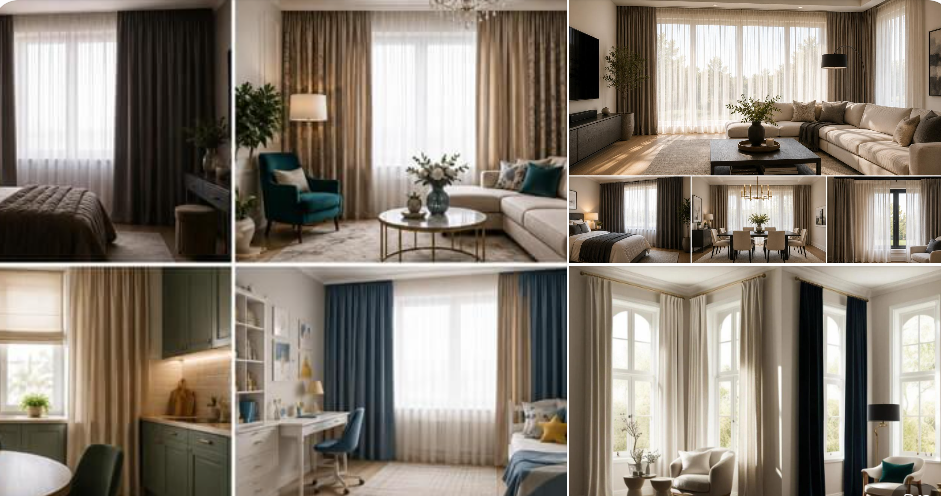
Different rooms have different lighting, privacy, and decorative needs. Here’s how to choose the most suitable curtain fabric for each space.
Living Room
Living rooms often benefit from fabrics that balance natural light with style.
Recommended fabrics:
- Linen
- Cotton
- Sheer fabrics
- Velvet
- Textured polyester
For a modern living room, try sheer curtains layered with linen-look drapes. For a luxurious design, choose velvet curtains with elegant wave folds.
Bedroom
Bedrooms need privacy, comfort, and good light control.
Recommended fabrics:
- Blackout curtains
- Velvet
- Cotton with blackout lining
- Polyester blackout fabrics
For better darkness, choose lined curtains and ensure the fabric is wide enough to minimize light gaps around the window.
Dining Room
Dining rooms are ideal for decorative curtain fabrics that complement furniture and lighting.
Recommended fabrics:
- Jacquard
- Linen
- Velvet
- Cotton blends
Choose subtle patterns or rich textures to create a stylish dining environment without making the space feel overcrowded.
Home Office
Home offices benefit from curtains that reduce glare while maintaining a comfortable level of natural light.
Recommended fabrics:
- Polyester
- Linen blends
- Cotton
- Light-filtering curtains
Consider a layered curtain design if your workspace receives direct sunlight during working hours.
Curtain Fabric Trends for Modern Interiors
Modern curtain design is moving beyond plain window coverings toward fabrics that add texture, comfort, and personality.
Some popular design directions include:
- Natural textures: Linen-look and cotton fabrics that bring a relaxed organic feel.
- Neutral colors: Beige, cream, ivory, greige, and warm grey.
- Layered curtains: Combining sheer curtains with heavier drapes for flexibility.
- Rich textures: Velvet, chenille, and woven fabrics for depth.
- Minimalist designs: Simple solid colors with clean lines and elegant pleats.
- Floor-to-ceiling curtains: Long curtains that visually enhance room height.
- Soft earthy tones: Terracotta, olive, taupe, and warm brown.
The right fabric and heading style can make even a simple window look professionally designed.
Tips for Maintaining Your Curtain Fabrics
Proper curtain care helps preserve the fabric’s appearance, color, and lifespan.
- Check the care label before washing or cleaning.
- Vacuum curtains gently using a suitable upholstery attachment.
- Avoid prolonged direct sunlight where fading is a concern.
- Use professional cleaning for delicate velvet, silk, and specialty fabrics when recommended.
- Avoid harsh detergents and high-temperature washing unless permitted.
- Rotate or adjust curtains occasionally if one side receives intense sunlight.
Different fabrics require different cleaning methods, so always follow the manufacturer’s care instructions.
Should You Choose Natural or Synthetic Curtain Fabrics?
Both natural and synthetic curtain fabrics have advantages.
Natural fabrics, such as linen, cotton, and silk, are appreciated for their authentic texture, appearance, and distinctive character.
Synthetic fabrics, such as polyester and acrylic, are often chosen for affordability, easy maintenance, and their ability to offer a wide range of styles and finishes.
The best choice depends on your budget, desired appearance, daily needs, and how the fabric will perform in your room.
Many modern curtains use blended fabrics to combine the advantages of different fibers.
Final Thoughts
Choosing the perfect curtain fabric is about finding the right balance between style, comfort, privacy, light control, and practicality. Velvet offers luxury, linen provides natural elegance, cotton delivers versatility, and polyester makes everyday decorating easier. Sheer fabrics brighten rooms, while blackout fabrics offer improved darkness and privacy.
Before purchasing curtains, think about your room’s purpose, window size, sunlight exposure, and interior design style. Selecting the right fabric will help create a window treatment that looks beautiful and works perfectly for your everyday needs.
Whether you’re decorating a modern apartment, a traditional home, or a luxury interior, the perfect curtain fabric can make a remarkable difference.
Ready to transform your windows? Explore different curtain fabrics, textures, and styles to discover the perfect match for your home.
